


Things to note about soft starters

Soft starters are a vital component in numerous industrial systems, serving a pivotal role in regulating the speed and torque of electric motors. By smoothly escalating the voltage supplied to the motor, soft starters alleviate mechanical stress, minimize electrical strain, and decrease the likelihood of electrical damage. This article delves deeper into what soft starters for motors are, how they operate, their benefits, and offers a comprehensive comparison between soft starters and alternative motor starting methods.
Soft Starter Applications and Uses
Electrical soft starters are engineered to manage the speed and torque of AC electric motors during startup and shutdown, enhancing motor longevity and system dependability. They accomplish this by gradually increasing the voltage to the motor, enabling a seamless startup and reducing wear and tear on mechanical components like gears and bearings. This gradual voltage increase continues until the motor reaches its rated speed, at which point the soft starter switches to full voltage supply. Similarly, during shutdown, the supply voltage is progressively decreased for smooth deceleration until the motor stops completely, at which point the input voltage supply is disconnected.
Regarding the working principle of a soft starter, the thyristor is the key component that controls the voltage. When a gate pulse is applied, it initiates current flow in one direction, known as the firing pulse. The firing pulse angle determines the portion of the input voltage cycle that is allowed to pass, ranging from zero to 180 degrees.
When considering when to use soft starters, they are applicable in a wide range of scenarios, including:
- Pump systems
- Conveyor belts
- Fans and similar belt-driven systems
- Crushers and mixers
- Bypass systems for redundancy purposes
How Does a Soft Starter Function?
Soft starters operate by regulating the voltage supplied to the motor, slowly increasing it from a low level to the full operational voltage. As its name suggests, it enables a motor to start softly. These devices are crucial in motor-driven applications to prevent machine damage and stress. The voltage increase occurs in stages tailored to the specific application. Although the voltage rises gradually, the motor can still attain full speed, just at varying intervals, thanks to thyristors or patterns of solid-state switches.
Can a Soft Starter Harm the Motor?
By design, a soft starter aims to safeguard the motor, so it doesn't cause damage. However, it has some limitations. It lacks speed regulation, only controlling the input voltage supply. Additionally, a soft starter often requires a heat sink to cool the power switches, as it dissipates some energy as heat. The starting torque is reduced, but this is generally acceptable for low- or medium-starting torque applications.
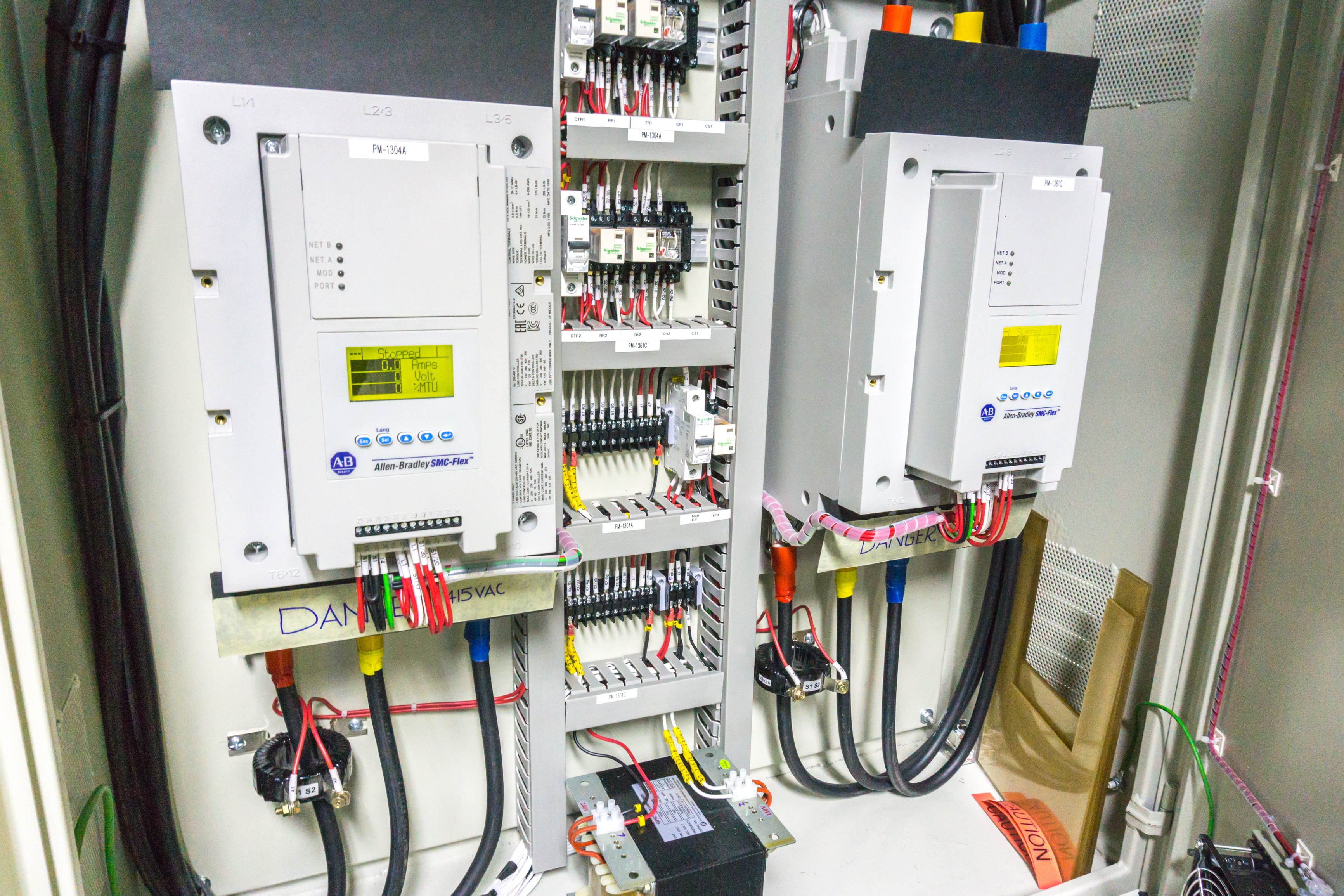
Types of Soft Starters
Based on your specific requirements, various types of soft starters are available:
- Primary Resistor: Known for smooth starts, primary resistors provide two-point acceleration, ideal for motors needing limited torque to avoid machinery damage, such as squirrel cage motors.
- Autotransformer: These use taps on transformer windings with built-in flexibility to control motor power input, making them suitable for starting star or delta-connected, 3-phase induction motors.
- Part-Winding: Ideal for motors producing centrifugal force, like those in pumps, fans, and blowers. Power is applied to one winding set to produce reduced starting current and torque.
- Wye-Delta: Available in open or closed transition, Wye-Delta starters can only be used in motors with connection points to each coil winding. They are commonly used in large horsepower and three-phase induction motors.
- Solid State: Often used in industrial applications, HVAC systems, processing equipment, elevators, mining, and more, solid-state starters replace mechanical components with electrical ones using silicon-controlled rectifiers (SCRs).
Pros and Cons of Soft Starters for Electric Motors
When it comes to electric motor applications, soft starters offer numerous advantages. They not only reduce stress on the motor while ensuring it reaches full speed but also decrease energy consumption and enhance system efficiency. In certain scenarios, soft starters are almost indispensable.
Advantages of Soft Starters
-
Stress Reduction on Motors:
A primary benefit of soft starters is their ability to minimize stress on motors. By incrementally increasing voltage, they alleviate both mechanical and electrical stress, thereby prolonging the motor's lifespan and decreasing maintenance needs. -
Lower Inrush Currents:
Soft starters also mitigate the inrush current—a surge of current that occurs during startup—which can potentially harm the electrical system and elevate energy consumption. By limiting this surge, soft starters provide additional electrical system protection. -
Improved Power Factor:
The gradual acceleration facilitated by soft starters enhances the power factor, which is the ratio of active power to apparent power in an electrical system. An improved power factor leads to reduced energy consumption, lower energy costs, and higher system efficiency.
Disadvantages of Soft Starters
While soft starters generally offer few disadvantages, they do have some limitations when compared to variable frequency drives (VFDs).
-
Lack of Speed Control:
Soft starters excel at limiting the current supplied to the motor but sacrifice the ability to control speed. For applications where speed control is crucial, a VFD can be used instead. -
Reduced Starting Torque:
Designed to prevent mechanical stress and reduce electrical demand, soft starters may limit torque during startup. This can be a significant drawback for applications requiring high starting torque, such as heavy loads or high-inertia machinery. In such cases, a soft starter may not provide the necessary torque for efficient motor operation. -
Heat Dissipation Issues:
Soft starters, particularly those utilizing semiconductor devices like thyristors, generate heat during operation. Effective heat dissipation is essential to prevent overheating and potential component damage. In applications where ambient temperature or enclosure design may hinder heat dissipation, reliability issues and reduced lifespan may arise. Proper cooling and thermal management are crucial to mitigate this limitation.

Choosing the Right Soft Starter: Factors to Consider
When selecting a soft starter for your motor, several factors must be taken into consideration to ensure you choose the right one for your application. Here are the main factors to consider:
-
Application and Type of Motor:
- Different types of motors, such as induction motors or permanent magnet motors, have unique start-up characteristics and may require different soft starter configurations.
- Consider the application of the motor, such as pumps, fans, or crushers, as they have varying duty cycles and starting requirements.
-
Size of the Motor:
- Larger motors require more current at startup and may necessitate a larger soft starter to accommodate the increased current demand.
-
Voltage and Current Requirements:
- Ensure the soft starter can handle the voltage and current requirements of the motor and any specific application requirements.
-
Number of Starts per Hour:
- If the application requires a high number of starts per hour, consider sizing the unit for a higher ampacity to allow for heat dissipation from frequent starts.
-
Application Requirements:
- Look for specific requirements such as over-current, under-voltage, or thermal protection.
- Determine if a 3-phase controlled device or a 2-phase controlled soft starter is required, as they have different inrush currents.
- Consider the ambient temperature and normal derate for higher ambient temperature locations.
Comparison with Other Motor Starting Methods:
Soft starters offer several advantages over other motor starting methods such as direct-on-line (DOL) starting, star-delta starting, and variable frequency drives (VFDs):
- Smooth and controlled starting, reducing stress on mechanical and electrical components.
- Adjustable overload protection to minimize electrical damage and improve system reliability.
- More energy efficient than DOL starting.
- Cost-effective for smaller motors compared to VFDs.
Manufacturers to Consider:
When shopping for mechanical soft starters, consider manufacturers such as Eaton, ABB, Toshiba:
- Eaton offers compact, multi-functional, easy-to-install, and easy-to-program starters designed for three-phase motor control.
- ABB provides built-in motor protection features, easy setup, and energy-saving bypass options, along with advanced features like torque control and pump cleaning.
Additional Resources:
For specific product information, product specifications, and performance recommendations, contact the Service and Support team of a reputable soft starter supplier.