


Exploring Contactors: Detailed Classifications and Applications
In the rapidly evolving field of electrical control technology in 2025, contactors, as indispensable components in power systems, have become increasingly sophisticated and specialized in their classifications and applications. This article delves into the classifications of contactors based on control current type, operating mechanism, contact pole number, protection form, and other special types, aiming to provide comprehensive technical reference for practitioners in related fields.

I. Classification by Control Current Type
AC Contactors
In AC circuits, AC contactors play a crucial role. They utilize the powerful magnetic field generated by AC current passing through an iron-core coil to precisely control the closing and opening of contacts. These contactors are widely used in various power, distribution, and electrical consumption scenarios, particularly for motor starting, stopping, and direction control, providing a solid foundation for industrial automation.
DC Contactors
Unlike AC contactors, DC contactors are specifically designed for DC circuits. Although their working principle is also based on magnetic field control of contact action, they differ significantly in structure and material selection. In cutting-edge fields such as new energy vehicles, aerospace, semiconductor manufacturing, and renewable energy generation, DC contactors are indispensable electrical components due to their high reliability, low noise, and good heat dissipation performance.
II. Classification by Operating Mechanism
Electromagnetic Contactors
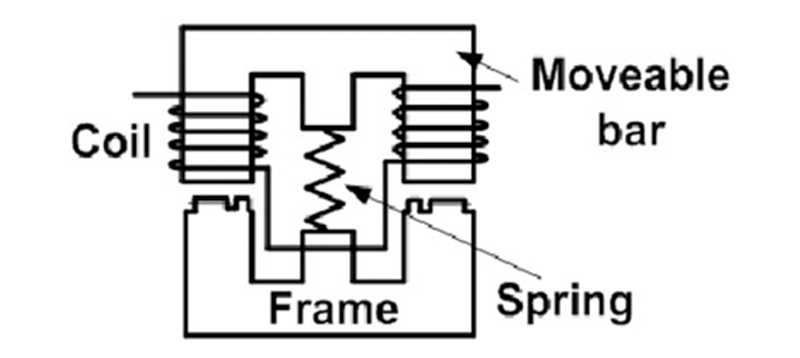
Electromagnetic contactors are the most common and widely used type of contactors. They utilize electromagnetic force to drive contact action, featuring simple structure, reliable operation, and easy maintenance. Whether in industrial automation production lines or household distribution systems, electromagnetic contactors are indispensable components.
Other Types of Contactors
In addition to electromagnetic contactors, there are also special types of contactors such as pneumatic and hydraulic contactors. These contactors exhibit unique advantages in certain specific application scenarios, such as the stability of pneumatic contactors in high-pressure and high-temperature environments, and the durability of hydraulic contactors in heavy-load and high-frequency operation scenarios. Although electromagnetic contactors still dominate the U.S. market, these special types of contactors have broad application prospects in specific fields.
III. Classification by Contact Pole Number
Single-Pole Contactors
Single-pole contactors are used only to control the opening and closing of a single circuit, suitable for simple circuit control requirements. They feature simple structure and low cost, making them ideal choices for small electrical systems.
Multi-Pole Contactors
Multi-pole contactors (such as double-pole, triple-pole, etc.) can simultaneously control the opening and closing of multiple circuits, suitable for complex electrical systems that require synchronous control of multiple loads. In industrial automation, large machinery and equipment, and power systems, multi-pole contactors are indispensable key components due to their high efficiency and reliability.
IV. Classification by Protection Form
Open-Type Contactors
The contacts, arc chambers, and other components of open-type contactors are exposed, suitable for clean environments with dry conditions, no corrosive gases, and no explosive dust. They feature simple structure and good heat dissipation, making them common components in small electrical systems or temporary electrical installations.
Enclosed Contactors
Enclosed contactors encapsulate the contacts, arc chambers, and other components within a housing, providing a certain level of protection against moisture, corrosive gases, and dust. In electrical equipment operating in harsh environments, enclosed contactors are widely recognized for their high reliability and long lifespan.
Explosion-Proof Contactors
Explosion-proof contactors are specifically designed for occasions with explosive gases or dust. Their unique structural design and strict manufacturing standards ensure safe operation in high-risk environments. In industries such as oil, chemicals, and mining, explosion-proof contactors are crucial equipment for ensuring production safety.

V. Other Special Types of Contactors
Vacuum Contactors
Vacuum contactors use a vacuum arc chamber as the contact system, offering extremely high reliability and long lifespan. In the control of high-voltage electrical equipment such as motors and transformers, vacuum contactors are preferred electrical components due to their excellent insulation performance and arc extinction capabilities.
Semiconductor Contactors
Semiconductor contactors complete current operation by changing the conduction and interruption states of the circuit loop. Their small size, light weight, and low power consumption make them exhibit huge application potential in micro-electrical systems and smart devices.
Permanent Magnet Contactors
Permanent magnet contactors utilize the principle of repulsion between like poles and attraction between opposite poles of magnets, replacing the traditional electromagnetic drive mechanism with a permanent magnet drive mechanism. This innovative design enables permanent magnet contactors to maintain high reliability while achieving micro-power operation. In today's mainstream of energy conservation and environmental protection, permanent magnet contactors undoubtedly have broad development prospects.
In summary, contactor technology in 2025 has shown a trend of diversification and specialization. Different types of contactors play irreplaceable roles in their respective fields of expertise. With the continuous advancement of electrical technology and the continuous expansion of application fields, contactor technology will continue to develop towards higher efficiency, reliability, and environmental protection.
